
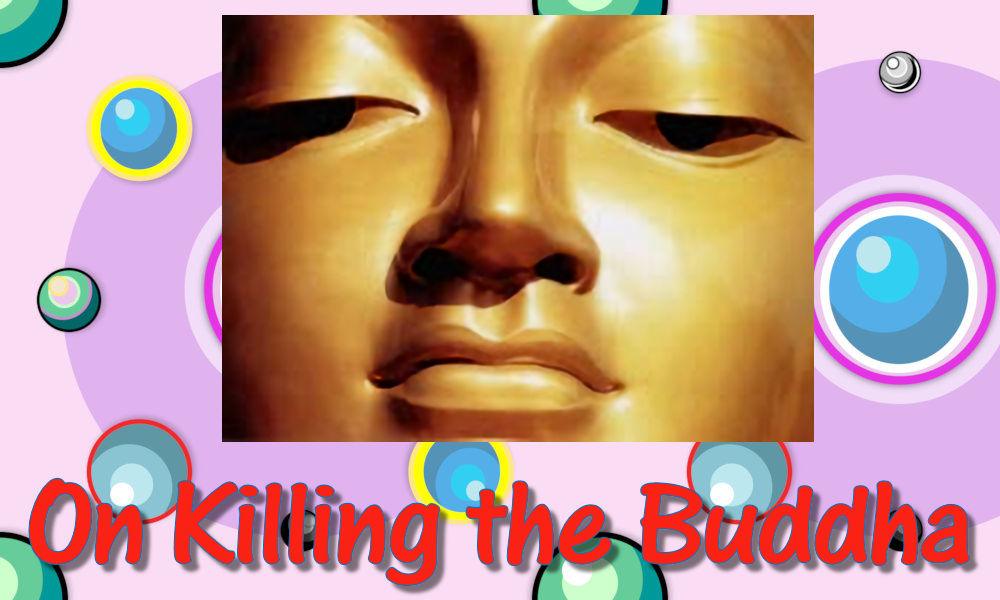
On killing the Buddha — This means ‘being with’ myself as I am, without judgement. I am how I am. And as I go there, I realize that, if I do not cling to the idea that I will be this way ‘forever,’ how I am shifts as time goes by. If I do not invest in my ‘tale of woe,’ I pass through it — until the next time.
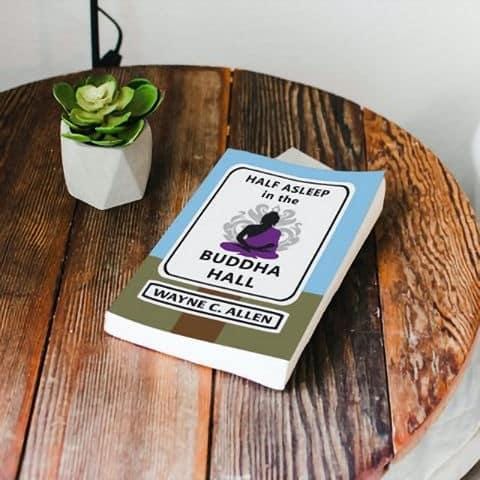
Looking for more on this topic?
Check out my book,
Half Asleep in the Buddha Hall.
My “Eastern” book takes you by the hand and helps you to find peace of mind.
Half Asleep in the Buddha Hall is a Zen-based guide to living life fully and deeply.
(Here’s a direct Amazon link)
Purchase digital versions (Apple, Nook, Kobo, etc.) from this page
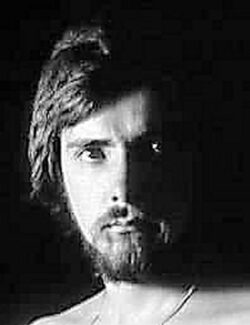
in a typically pensive mood
Those of you that have read my e‑book, The Watcher, will know that, from my 20s through my 50s, I had a proclivity toward depression. Even at my best, I’m seldom a bucket of yuks.
sI am now content for great portions of my life, and included in that contentment is an undertone of sadness and even despair (… Trump doesn’t help.) What I have learned — since the time I described in The Watcher — is to accept this undertone as one way in which I choose to frame my reality.
The Myth of Happily Ever After
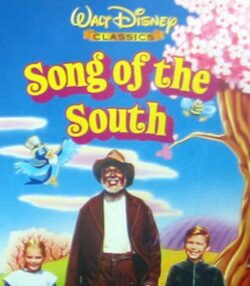
Some might suggest that the real goal of life is to live happily ever after. I describe that as “having the cartoon version of the bluebird of happiness flitting around your head.”
It’s Uncle Remus skipping along, singing “Zippity Do Dah.”
I, on the other hand, insist that the goal of life is to live it. All of it.
On Killing the Buddha
Back in the 70s, Sheldon Kopp wrote a famous book based upon a Zen teaching, called, “If You Meet the Buddha on the Road, Kill Him!” It’s a book about psychotherapy, and about life.
The Buddha isn’t out there
The idea behind the Zen story is this: nothing outside of you brings a moment of enlightenment. Nothing outside yourself brings rescue (those of you waiting for Mr. or Ms. “Right,” give it up!) And if something seems like the answer, then it’s time to drop it in its tracks.
No religion is going to save you. No politician or party is going to make it “all better.” (You’ve noticed that, right?) No lobbying organization is going to change the world for the better.
You and your life will always be just what it is.
The Buddha is also not hiding inside of you.
There is an internal aspect, as you might suspect, to the Buddha on the Road thing. You also have to kill the Buddha inside of you.
Often, as we begin in-depth self-exploration, we shift from looking outside for answers and rescue to thinking we will save ourselves. In other words, that maybe ‘out there’ is screwed up, but ‘in here,’ boy do I know everything!
My dad used to do one-liners. One of his favourites went,
“Everyone is crazy except me and thee, and sometimes I worry about thee.”
Here’s a flash. Your answers are not right or true. They are simply the story you are telling yourself. If you believe you are enlightened, kill the Buddha.
So, what does this have to do with my original, ‘depression’ illustration?
- Well, an external ‘cure’ for my mood was impossible. I could have gone to my doctor and got some Prozac, but that would have changed nothing. (My usual Prozac description is “Your world still sucks, and you don’t care.”)
- I could have looked for someone outside of me (Hi, Darbella!!!) to ‘make’ me happy, and cheer me up, but that would mean she’d have been caught in that role. Fortunately, she’s smart enough to laugh and tell me to get over myself.
- I could have gone inside and bemoaned my fate, my life, my lack of… whatever. I could have screamed, “It’s not fair!” I could have gone inside and repeated silly affirmations, tried to make myself change how I felt.
Instead, I Killed (and continue to kill) the Buddha
This means continually ‘being with’ myself as I am, without judgement. I am how I am. And as I go there, I realize that, if I do not cling to the idea that I will be this way ‘forever,’ how I am shifts as time goes by.
If I do not invest in my ‘tale of woe,’ I pass through it… until the next time.
I am not a moody, or depressed, or sad, or happy, or any other kind of person. I am just who I am right now, and part of that is this:
I tell myself stories about myself, the world, and others. As do we all. Every time I attach to a story, and give it validity, I create a false self (the internal, false Buddha) that needs to die.
Because everything shifts, changes and dies.
Take some time to notice how tenaciously you cling to the certainty of the stories you tell yourself. See how ridiculous all of it is.
If you see yourself as a victim (of another person or of your ‘genetics,’) what changes? How does this help? Is it even true, in this moment?
Rather, kill your belief in the certainty of your stories, and accept the ‘whole catastrophe.” After all, stomping your little feetsies and saying “No!” doesn’t change anything.
What changes things is walking your path, celebrating your self, your learnings, and your life, without attaching to or believing one bit of it.
Here’s some more Sheldon Kopp stuff; his “eschatological laundry list.” He wrote these for a magazine article, and they were later published as a book with photos. It’s out of print, but Amazon can find you a used copy. Its full name is No Hidden Meanings: An Illustrated Eschatological Laundry List
1. This is it!
2. There are no hidden meanings.
3. You can’t get there from here, and besides there’s no place else to go.
4. We are all already dying, and we will be dead for a long time.
5. Nothing lasts.
6. There is no way of getting all you want.
7. You can’t have anything unless you let go of it.
8. You only get to keep what you give away.
9. There is no particular reason why you lost out on some things.
10. The world is not necessarily just. Being good often does not pay off and there is no compensation for misfortune.
11. You have a responsibility to do your best nonetheless.
12. It is a random universe to which we bring meaning.
13. You don’t really control anything.
14. You can’t make anyone love you.
15. No one is any stronger or any weaker than anyone else.
16. Everyone is, in his own way, vulnerable.
17. There are no great men.
18. If you have a hero, look again: you have diminished yourself in some way.
19. Everyone lies, cheats, pretends (yes, you too, and most certainly I myself).
20. All evil is potential vitality in need of transformation.
21. All of you is worth something, if you will only own it.
22. Progress is an illusion.
23. Evil can be displaced but never eradicated, as all solutions breed new problems.
24. Yet it is necessary to keep on struggling toward solution.
25. Childhood is a nightmare.
26. But it is so very hard to be an on-your-own, take-care-of-yourself-cause-there-is-no-one-else-to-do-it-for-you grown-up.
27. Each of us is ultimately alone.
28. The most important things, each man must do for himself.
29. Love is not enough, but it sure helps.
30. We have only ourselves, and one another. That may not be much, but that’s all there is.
31. How strange, that so often, it all seems worth it.
32. We must live within the ambiguity of partial freedom, partial power, and partial knowledge.
33. All important decisions must be made on the basis of insufficient data.
34. Yet we are responsible for everything we do.
35. No excuses will be accepted.
36. You can run, but you can’t hide.
37. It is most important to run out of scapegoats.
38. We must learn the power of living with our helplessness.
39. The only victory lies in surrender to oneself.
40. All of the significant battles are waged within the self.
41. You are free to do whatever you like. You need only to face the consequences.
42. What do you know… for sure… anyway?
43. Learn to forgive yourself, again and again and again and again…