
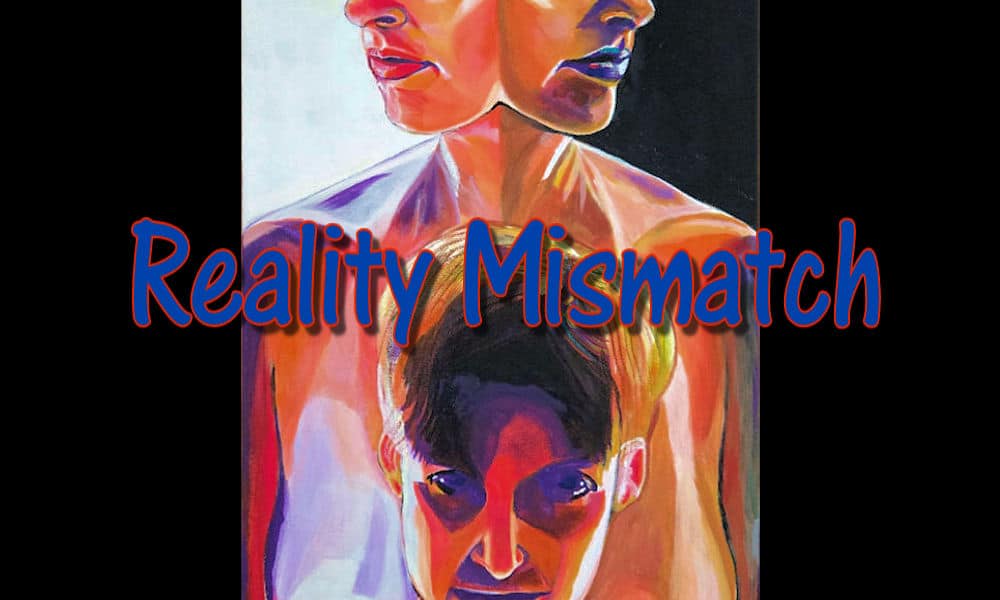
Reality Mismatch — We all have developed an internal picture, (or pictures) of “reality.” We stack evidence for the validity of our internal picture. Stress occurs when our internal picture clashes with the external world.
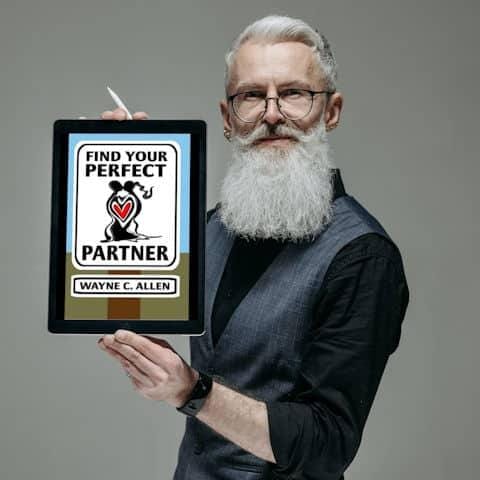
Find Your Perfect Partner
If you are not in a relationship, and want to do a much better job finding a partner that suits you, have a look at my book, Find Your Perfect Partner.
You’ll find the tools you need to engage your brain!
Direct link to Amazon for all formats
Purchase digital versions (Apple, Nook, Kobo, etc.) from this page
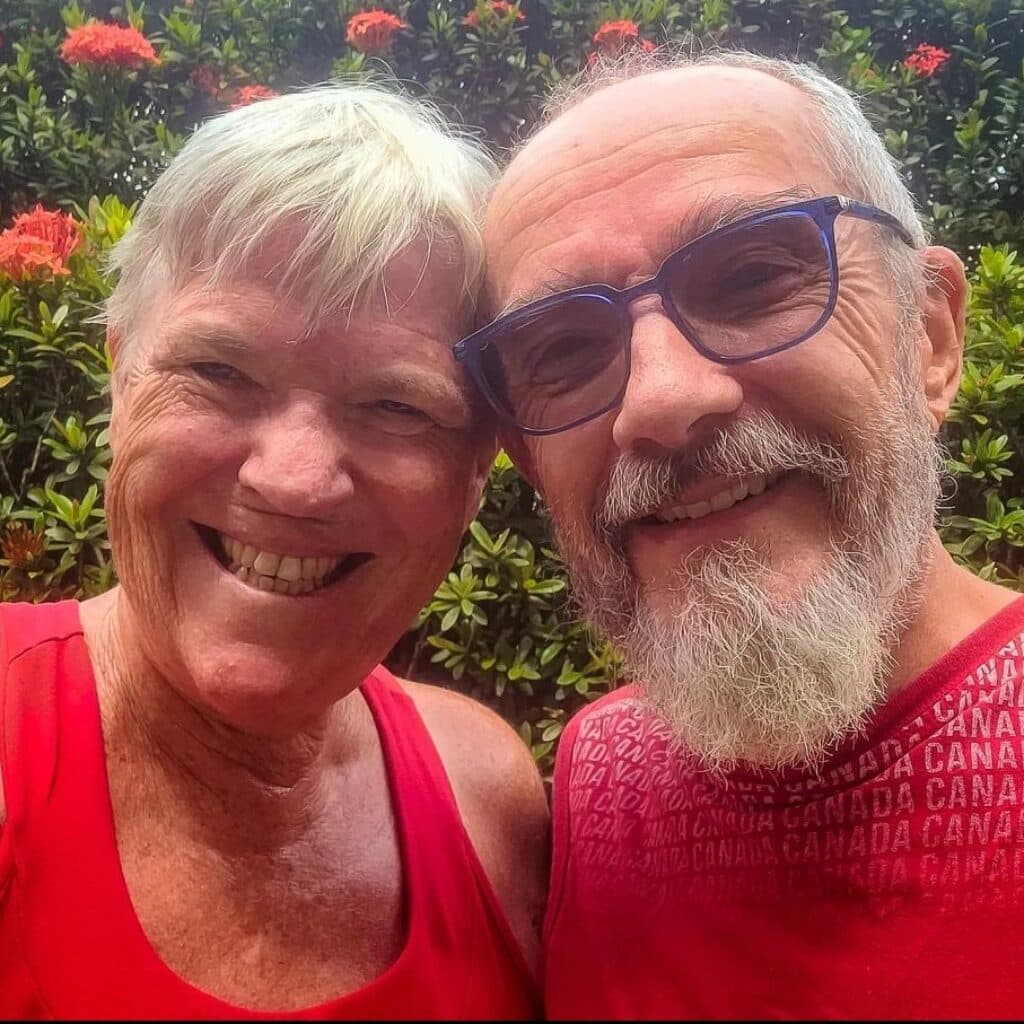
So, today is our 40th Anniversary, and this is a bonus article!
I have lately been subscribing to a coupe of substacks. One is called “Buddhist Philosophy.” Pretty interesting stuff, and as much Buddhist psychotherapy as it is philosophy.
Yesterday’s tome was about inner/outer conflict… kleśas (kleshas)… defined as
…mental states that cloud the mind and manifest in unwholesome actions. Kleshas include states of mind such as anxiety, fear, anger, jealousy, desire, etc. Wikipedia
I’ve spent a lot of time writing about this dichotomy – the endless conflict between “reality” and our maps of “reality.”
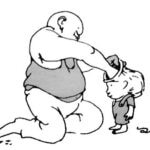
Our maps develop as we do… our parents build their belief system(s) into us… this because we arrive as blank slates, knowing nothing, understanding nothing.
Our perspectives, then, are “gifts” from our Family of Origin. That family expands as we grow to include: close relatives, religious groups, political groups, neighbourhood groups, and our peers.
The initial perspective set is absolutely necessary; it’s how we learn to look to the left before crossing the street, for example.
Interestingly, going to Great Britain proves the depth and strength of this one. For the first while, you approach a crosswalk, look left, and almost get run over from cars coming from the right.
(Eventually, you adjust, but in my experience, if I distract myself, at the next corner, I again look left…)
Where things get interesting is when perspectives are based upon beliefs. Like what a subset of people are capable of. Or what are roles are as we engage with others.
Then, there are “world” perspectives, where dissonance between interior and external increasingly clashes.
In 2026, the list of said clashes is a mile long.
I could head off on a political rant at this point, but… my background as a therapist leads me, rather, to look at personal interactions.
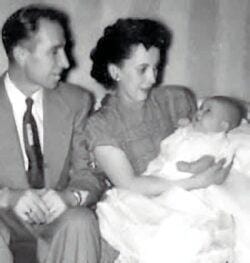
My parents were quite good at “parenting,” IMHO. They gave me a lot of freedom to screw up, and I certainly did. They also let me know that their perspective was that I was a very smart, clever little guy.
That, while totally and absolutely true 😉got me into all kinds of messes.
One of my books is called Find Your Perfect Partner. I wrote it to expand upon a booklet I wrote called the List of 50. Both are about taking the time to describe to yourself the kinds of people you wish to associate with.
That may seem strange. But really, most of us go through life in relationship with people based upon superficials, chance meetings, random associations, etc. We form relationships to create tribes to replace our Family of Origin.
Here’s the background story. And I would hasten to add that my belief in my intelligence and wisdom (my internal perspective) was what led me down this very strange path.
(Important backstory information: Today, April 5, 2026 is Darbella’s and my 40th anniversary. It is also my 3rd marriage. Old soul, slow learner. This story is an overview of marriage # 2.
I met “Sue” (I’ve told this story in booklets and in one of my books, and I call her “Sue,” so I’ll use that pseudonym here) in university.
The university did semesters in a 4–1‑4 plan, and January was either a one course intensive, or a month off. I was there that January but not taking a course.

I wandered into the University Bookstore, and there “Sue” was, all 5′2″, blond-hair, blue eyes, low cut top of her. I was smitten, otherwise known as “lust-struck.”
Long story short, I asked her out. One thing led to another, and she moved into my dorm room. And back out again.
Things, for me, shifted between “OK” and “no way.”
Despite this, I kept inviting her back into my life. My perspective told me that I was all knowing and wise, and if she just tried a bit harder, I’d be OK. Just OK.
She went off to do an advanced degree. We toned down the relationship.
She returned in June and we were sitting in my car. She asked me whether I was going to propose, and I remember thinking, “Don’t do it. Run!!!”
The other side of my head (the side with the invalid perspective about my ability to change others…) said, “But you have 3 years in. You can always change her!”
I married her.
See? Dumb.
I couldn’t. So, with a fresh counselling degree in my back pocket, I ended things after 7 years.
During counselling training, I’d learned a good communication model, and better ways of relating… none of which had anything to do with changing the other person.
What it did have to do with was respect, and caring for another person exactly as they are, along with a way to talk with each other that leads to issue resolution.
Not fixing the other. ISSUE resolution.
This was hard for me, as my baseline perspective is that I am both smart and right. So, I must reign in my internal perspective, by noticing that I am projecting it on the external world.
As this applies to relating (especially with Darbella, but also with everyone else…)
I have to see my perspective is one of two. Not right. One of two. And I have to do this repeatedly.
Ben Wong from The Haven used to say,
“Change isn’t possible, but choice always is.”
Two things:
- This means that our internal perspective is made of granite, or steel. It’s there forever, and nothing can change it. That said, if I pay attention to it, notice when it tries to exert itself, and I can choose to act differently.
- This means that choosing must happen each time (always). No “one and done.” No fix, no cure. Just endless repetition of that works, in the face of the internal pull to head down dumb paths.
I wrote Find Your Perfect Partner to describe a key to all of this.
Find Your Perfect Partner
If you are not in a relationship, and want to do a much better job finding a partner that suits you, have a look at my book, Find Your Perfect Partner.
You’ll find the tools you need to engage your brain!
Direct link to Amazon for all formats
Purchase digital versions (Apple, Nook, Kobo, etc.) from this page
Remember, I dated “Sue” because I found her attractive, (a normal reason to go out on a date.) YET, once I got to know her and realized we were NOT compatible, I decided to fix her, rather than move on.

You wouldn’t believe how many people I know who are in relationships precisely for this reason, and are either in the process of divorcing, or have moved to separate bedrooms and are going to tough it out until they die.
If they divorce and do no internal work, the next time, the pull of their internal perspective will be to find another (broken) person just like the last person and repeat the “fixing” dance again.
It is possible to decide for yourself what kind of person you want to be in relationship with and then find that person.
For me, the willingness to talk issues through to resolution is key, as is being content to be with the person I am with; not trying to turn my partner into someone else
You gotta decide what the basis of your relationship is
It can’t (or ought not to be) “She ought to be fixable.”
It can’t be “He gives me great orgasms.”
It can’t be, “I don’t want to be alone, so (s)he’s better than nothing.”
Recognise the danger inherent in believing in your internal perspectives. Like any other belief, you’re caught in a game of trying to hammer reality into what it isn’t.
Instead, notice, breathe, let go of your stories, and act in the real world. Responsibly, and self-responsibly.