
Into the Abyss
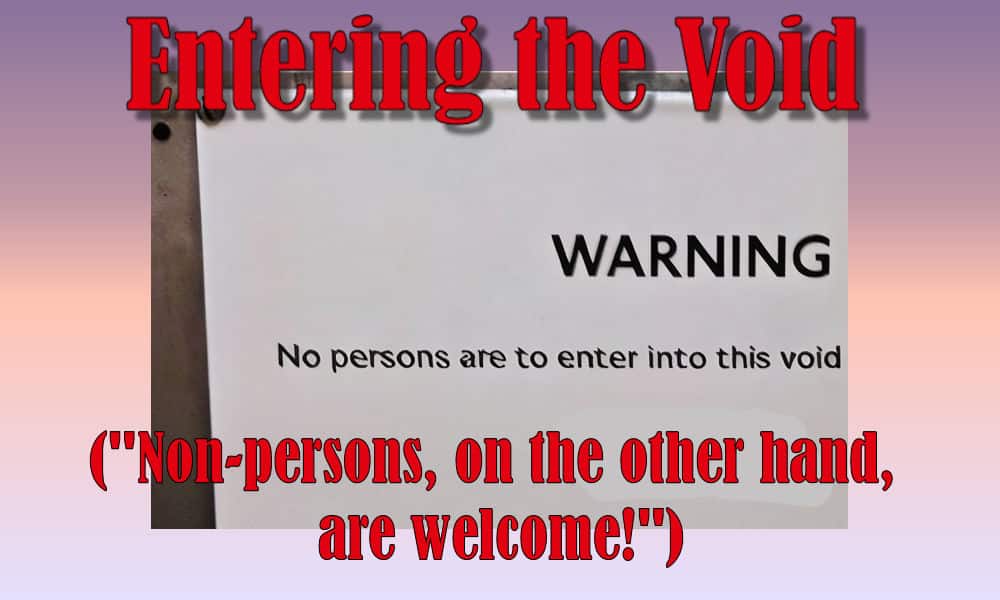
Entering the Void — The danger of “soul work” — of looking deeply into the void, is that you are painted with the colours that you see. If you peer into evil, you have a greater chance to become evil.

This Endless Moment
An excellent guide to life and living.
Learn to focus your attention of who you really are.
Purchase all formats from Amazon
Purchase digital versions
(Apple, Nook, Kobo, etc.) from this page
Darbella and I just had a movie date
We often watch the incredible Swedish movie take on Stieg Larsson’s “The Girl with the Dragon Tattoo.” We’ve read his three books in the series, (as well as other from the authors who picked up the series after his untimely death.)
The first time I watched I was amazed by how much the actor Noomi Rapace looks like I imagined the hero, Lisbeth Salander, would look. But I digress. If you haven’t read the Millennium Trilogy (the Salander books), you really need to.
Looking into the Void
Without giving away too many plot points, Lisbeth is set up, dropped into a mental hospital, and is the target of a conspiracy. In book 1, (“Dragon Tattoo”) she is 24, out on her own, and still being manipulated by the conspirators.

The Swedish movie is wonderful, and sticks to the book (much better IMHO than the Hollywood version.
You soon realize that Salander has looked into the void, and found the void staring back. (Paraphrasing Nietzsche: “And if you gaze for long into an abyss, the abyss gazes also into you.”, from “Beyond Good and Evil.”)
There is a wariness to her, one that permeates the books. And yet, she is a fiercely loyal (if a bit odd …) friend.
Salander was once a victim. She learned to stand forth, to be real, and to fight back.
Nietzsche was making a seminal point — the danger of “soul work” — of looking deeply into the void, is that you are painted with the colours that you see. If you peer into evil, you have a greater chance to become evil.
The only thing that holds you back from this plunge into the depths is the strength of your will.
Salander is a revenge machine, but not in a mindless way. There is no doubt that she has been “damaged” by the past — but it is equally clear that she has learned to stare into the void without blinking.
We might think of this as mental toughness.
In zazen, we do a similar thing. This process of “just sitting” is also a “staring into the void,” and it becomes crystal clear that we are looking into our own “emptiness.” If you just look, without leaping into story telling mode, then you up your tolerance for “looking without blinking.”

Normally, however, we are anything but quiescent. We start our story telling machines, and we are away to the races. We blame, we judge, we plot, and we give up.
What we do not do, is sit quietly, and then get up.
“Getting up” is shorthand for actually doing something. Anything. As opposed to falling into the void of our own stories. Thus, the original image, and “No persons are to enter this void …”
Where we fall down is in personalizing (using the ego) what is happening to us.
“Why is this happening?” is about a situation.
“Why is this happening to me?” is an unanswerable ego question.
Or, if there is an answer, it is, “Why not you?” If you can step out of the ego position, you see that the “Why me?” question is a waste of time. Better: “What shall I do now?”
Tao Te Jing 3.
… The Master leads
by clearing the crap
out of people’s heads
and opening their hearts.
He lowers their aspirations
and makes them suck in their guts.
He shows you how to forget
what you know and what you want,
so nobody can push you around.
If you think you’ve got the answers,
he’ll mess with your head …
translated by Ron Hogan
As the writer suggests, we can live with the crap in our heads, or we can find the depth in our hearts.
Now, this is not the airy fairy heart of Hallmark Cards. This is heart of the warrior, the heart of the poet, mystic, and artist. It is the heart of passion, and the heart of courage. This is the heart that enacts life, as opposed to the head full of crap that keeps one stuck in fearsomeness.
The “lower aspirations, and sucked in guts” is interesting. What he’s saying is that there is a fine balance between the fantasies of what we think we want, and what we might actually do. This is the danger of staring into the void.
I see many people fall into the “Now that I have read books and done a few things, I know everything, and I’m special!” pit. The abyss has grabbed them firmly and is not about to let go. So, the Master “messes with your head.” He says black is white. He pries your fingers from your ego-driven need to be special, empties you of your desires, and frees you to act.
How can this be?
In Zen, we say, when eating, eat. When painting, paint. When sitting, sit. These things are done without aspiration, without a goal, with little or no internal drama or dialog.
You pick up a brush, and paint.
If you forget what you know and what you want, you remove the leverage others have over you — there is just what is going on, and then the next thing. You can be present and do what needs to be done.
Lisbeth Salander is a fictional character, but I find her attractive because she can walk into the void and not lose herself in it. Her pain is very real, visceral, and yet she can transcend and include it.
How different from the norm, where all people want is escape — no pain. Impossible.
The void is not a place “out there” that we can ignore. That’s the irony. We bring the void with us, wherever we go. It’s a personal space, containing all the things we fear, dread, or are reluctant to look at.
Far from being negative, the void is the home of our depth of being. It seems to be the anchor point between creativity and madness. (Think van Gogh — his paintings clearly come from his abyss, and in a sense he lost himself in there. With no one to guide his entrances and exits, he found his own path out.)
I would be remiss if I did not give you a tool to explore this landscape. There is a Buddhist meditation practice called Tonglen.
This practice is all about taking pain and suffering into your heart through an in breath, and exhaling peace and healing.
I’ve borrowed a Tonglen practice (Tonglen means, “giving and receiving.”) from the Naljor Prison Dharma Service, expanded it into a 4‑step process, and also recorded it, if you’d like to listen instead of read.)
The cycle can be as follows: Tonglen for self, for a loved one, for someone with whom you have issues, for the world.
Audio of Tonglen Practice
In Tonglen practice, through our compassion we take on and embrace without resistance the various sufferings of all beings, including ourselves: their fear, hurt, frustration, pain, anger, guilt, bitterness, loneliness, doubt, rage, and so forth.
In return, we send out loving-kindness, happiness, peace of mind, well-being, healing, and fulfillment.
Sit quietly, calm the mind, and centre yourself. Identify that part of you (your heart centre) that is “all compassion, all the time.” Breathe light and compassion into your heart.
Now, reflect on the immense suffering that you, and all beings everywhere experience. Allow this suffering to open your heart and awaken your compassion. You may also choose to invoke the presence of all the Buddhas, Bodhisattvas, and enlightened beings, so that through their inspiration and blessing, compassion may be born in your heart. In this way, you are resting in the enlightened nature of the mind. This Buddha nature is an inexhaustible source of purity, generosity, and compassion.
Self
Open yourself to your own suffering, pain, confusion, and distress. As you feel your heart opening in compassion for yourself, imagine that all of your suffering gathers itself into a mass of hot, black, grimy smoke.
Now, visualize breathing in this mass of black smoke, seeing it dissolve into the very core of your self-grasping (ego) at your heart centre. There in your heart, it destroys all traces of fear and selfishness (self-cherishing) and purifies all of your negative karma.
Imagine, now, that your fear, self-centredness and negative karma has been destroyed, your enlightened heart is fully revealed. As you breathe out, imagine you are sending out the radiance of loving-kindness, compassion, peace, happiness, and well-being to yourself. See this brilliant radiance purifying all of your negative karma. Send out any feelings that encourage healing, relaxation, and openness.
Continue this “giving and receiving” with each breath for as long as you wish.
Loved One
Imagine in front of you, as clearly as possible, someone you care for who is suffering. Open yourself to this person’s suffering. Allow yourself to feel connected with him or her, aware of their difficulties, pain, and distress. Then, as you feel your heart opening in compassion toward the person, imagine that all of his or her suffering comes out and gathers itself into a mass of hot, black, grimy smoke.
Now, visualize breathing in this mass of black smoke, seeing it dissolve into the very core of your self-grasping (ego) at your heart centre. There in your heart, it destroys all traces of fear and selfishness (self-cherishing) and purifies all of your negative karma.
Imagine, now, that your fear, self-centredness and negative karma has been destroyed, your enlightened heart is fully revealed. As you breathe out, imagine you are sending out the radiance of loving-kindness, compassion, peace, happiness, and well-being to this person. See this brilliant radiance purifying all of their negative karma. Send out any feelings that encourage healing, relaxation, and openness.
Continue this “giving and receiving” with each breath for as long as you wish.
An “Enemy”
Now, imagine someone with whom you have difficulty, or who you consider to be an enemy, or those who have hurt you or others. Open yourself to this person’s suffering. Allow yourself to feel connected with him or her, aware of their difficulties, pain, and distress. Then, as you feel your heart opening in compassion toward the person, imagine that all of his or her suffering comes out and gathers itself into a mass of hot, black, grimy smoke.
Now, visualize breathing in this mass of black smoke, seeing it dissolve into the very core of your self-grasping (ego) at your heart centre. There in your heart, it destroys all traces of fear and selfishness (self-cherishing) and purifies all of your negative karma.
Imagine, now, that your fear, self-centredness and negative karma has been destroyed, your enlightened heart is fully revealed. As you breathe out, imagine you are sending out the radiance of loving-kindness, compassion, peace, happiness, and well-being to this person. See this brilliant radiance purifying all of their negative karma. Send out any feelings that encourage healing, relaxation, and openness.
Continue this “giving and receiving” with each breath for as long as you wish.
The World
Now, imagine all the people in the world — Reflect on the immense suffering that all beings everywhere experience. Allow their suffering to open your heart and awaken your compassion. Open yourself to the suffering of the people of the world. Allow yourself to feel connected with everyone, aware of their difficulties, pain, and distress. Then, as you feel your heart opening in compassion toward them, imagine that all of their suffering comes out and gathers itself into a mass of hot, black, grimy smoke.
Now, visualize breathing in this mass of black smoke, seeing it dissolve into the very core of your self-grasping (ego) at your heart centre. There in your heart, it destroys all traces of fear and selfishness (self-cherishing) and purifies all of your negative karma.
Imagine, now, that your fear, self-centredness and negative karma has been destroyed, your enlightened heart is fully revealed. As you breathe out, imagine you are sending out the radiance of loving-kindness, compassion, peace, happiness, and well-being to all people in the world. See this brilliant radiance purifying all of their negative karma. Send out any feelings that encourage healing, relaxation, and openness.
Continue this “giving and receiving” with each breath for as long as you wish.
At the end of your practice, generate a firm inner conviction that all beings have been freed of suffering and negative karma and are filled with peace, happiness and well-being. You may also wish to dedicate the merit and virtue of your practice to the benefit of all sentient beings.