
Most people fall first into lust, which they convert into socially acceptable things like romance and move. This article explores this process of sanitizing lust, and suggests Zen alternatives

My first and most popular book,
This Endless Moment.
Learn to live a full and satisfying life.
Non-attachment and Lust — the Perils of Romance
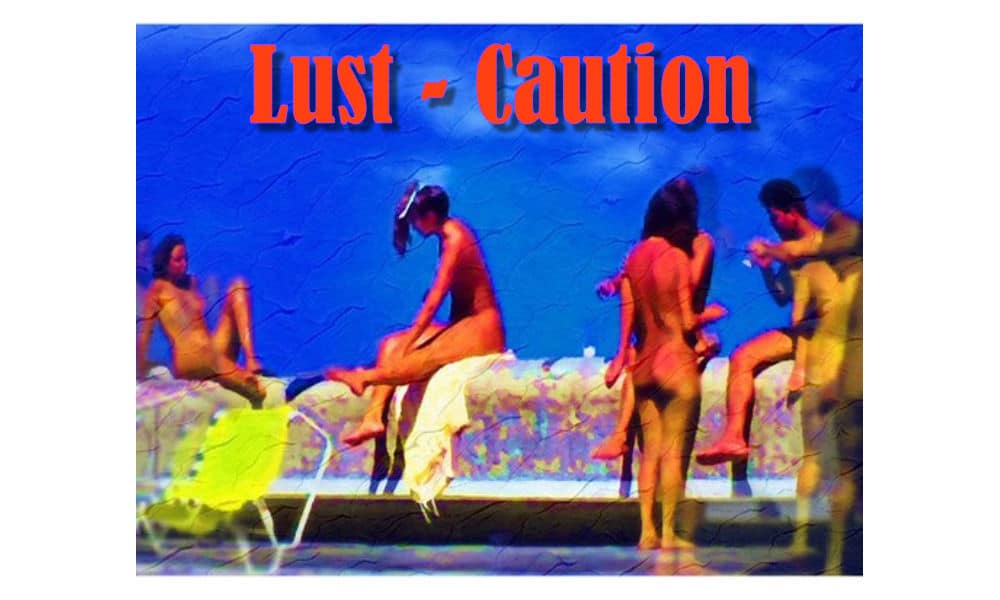
The first part of today’s title refers obliquely to Ang Lee’s recent movie, “Lust, Caution.” As is typical of Lee, the photography is excellent, as are the quite graphic sex scenes. The caution part is amply demonstrated by the end of the movie — when lust gets mixed into the sex, the result is not pleasant.
Most people have a great resistance to their lust and passion.
And yet, most relationships start right there.
Biologically, we haven’t changed much since we swung out of the trees, and the ‘lust-romance’ stage is part of our limbic system. This oldest part of the brain is also responsible for our “fight — flight” mechanism, and other semi or completely automatic systems.
A friend recently discussed her 30-year marriage, which, she thinks, may be coming to an end. She noted,
“I saw him 30 years ago, fell into lust, left my marriage and moved in with him. For 15 years, the ‘great sex with a bad boy’ was all I noticed. Now, I see past that, and there is nothing left. How could I have been so blind?”
Blindness, for sure. But let’s talk about Zen for a minute.
Two things:

1) Buddhists, since, well, the Buddha, have placed great emphasis on the monastic life — monks and nuns are by definition less attached, as they are not permitted intimate relationships with lovers. This is, of course, a bit disingenuous, as this approach tries to get around lust by legislating it away.
Thus, this Zen story (which I analyze at length in my book, Half Asleep in the Buddha Hall
Two monks are crossing a river, when they meet a beautiful woman. She asks for help crossing the river. The older monk picks her up and crosses the river, while the younger monk looks on in shock (as monks are supposed to be celibate and avoid beautiful women.) A mile or so down the river, the younger monk is still in shock, and can’t stop thinking about the older monk’s behaviour. The older monk says something like, “I crossed the river with that girl a mile ago and left her there, yet you still carry her.”
The thing is, pretending that something “there” is not there does not make it “not there.”
Parenthetically, this is why the Tantric side of Buddhism gets so much “sex press.” Despite being a small part of the whole thing, Tantra does make the point that sexual desire can be channeled and used as a way to reach enlightenment.
One odd reason this sort of “hands on” (so to speak) approach was developed was because of “lay people” wanting to learn a path to enlightenment. The judgement was that meditation was too hard for them, so a more practical approach was devised–enlightenment through active engagement with the body, through its senses. But I digress.
2) The irony of the monastic path is it tries to short-circuit the need for moment-by-moment awareness, which includes what we feel. And one of the things everyone feels is lust — passion.
The older monk in the story above makes this point. One can feel whatever one feels, and then move on. He picked her up, interacted with her, and set her down. Moment-by-moment awareness. Not so for the younger monk, who carried her with him, in his head.
Meanwhile, back to lust
My client perfectly demonstrates inattention taken to an extreme.
The vast majority of people have a difficult time enacting, describing, or even admitting to their passions and lusts. Typically, if you are available and looking, seeing someone attractive leads to lust (limbic system 101) and then to the sub-conscious thought: “Yikes! I’m turned on, and that’s not a good thing to admit, so I’ll just pretend it is love! Then, what I’m feeling is socially acceptable and sanctioned.”
People take perfectly good “turned on” feelings, and convert them to romance.
The underlying feeling, then, never gets addressed. It gets sublimated, and covered over with the thin veneer of socially acceptable rhetoric.
Romance is a stage
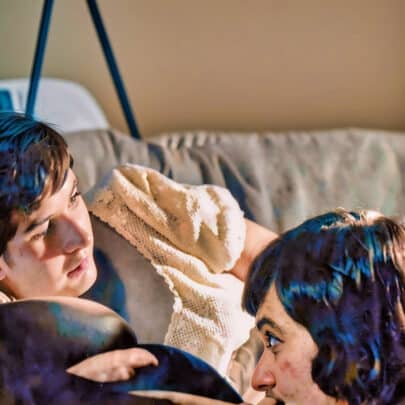
The Romance stage lasts 6 months to maybe 2 years in extreme cases. When we are in romance, we are quite selective in what we see. It’s like my client, who spent years missing or discounting essential elements in her ‘bad boy’ husband’s behaviour. She fell out of romance years earlier, but this stage planted the seeds for her continued excuse-making.
Romance is designed to bind the couple together. Biologically, this stage was meant to lead to breeding and babies. Remember, 100,000 generations ago, we lived to 30 or so, so the biological imperative was extreme. Romance makes lust palatable. Being in romance meant overlooking all the stuff that might cause the couple to part ways. “He” didn’t lie–he’s just providing “additional information!”
Coming out of romance happens as we start to notice things about our partner that we do not like. Before the moment when “things change,” we either miss the quirky stuff entirely, or think it endearing, or think, “If she loves me, she will change.” Falling out of romance, it’s “Holy crap! I can’t live with that! Where did that come from? He lied to me!”
Well, no, “he” didn’t.
1) Until then, you did not want to see this stuff, so you ignored it, and
2) both of you were on your best behaviour, sanitizing the experience, so your partner wouldn’t run from the room.
People caught in romance exude that sickly sweet odour of perfection, as they gaze into each other’s eyes and profess undying and unchanging love. The first few cracks in this veneer happen as “I’m just suggesting this to make you even more perfect!”
Inevitably, the other shoe drops, and you realize you are in relationship with a real person, foibles and all.
All you can hope is that you were not completely blinded by your lust. Married to a bad boy/girl, as opposed to just a little blinded. No wonder the monastic life seemed to be a cure.
Or, you could wake up
If you think about it, all the trouble started when we stopped being honest, and just fell into the “lust papered over by romance” trap.
Non-attachment is this: Owning that you are having feelings, without judging that they are about the other person.
Attraction (or repulsion, or neutrality) is what I do when I confront someone or something. The other person is the other person, and I am creating my internal feeling. If I am attracted, I may go so far as to create passion and lust. It’s always “all about the feelings I am creating,” never about the “other.”

I once worked with a guy who had a psychotic break because he’d badgered his girlfriend into having sex with him, and then blamed her because he wanted sex all the time. He twisted and turned the story so much that somehow his badgering and pressuring her was also her fault. He really, really, had a difficult time admitting to his own sexuality and lust, so much so that he snapped his mind.
I’ve seen this on a much smaller scale, with a couple of people who get their shorts in a knot when I write about topics sexual. When I say, “Isn’t it interesting that you are upsetting yourself over mentions of sex,” they reply, in effect, “Maybe you shouldn’t write about it. You’re probably offending plenty of people.” They miss their discomfort–the discomfort they are creating over what they imagine I’m writing about.
Much easier, I think, to be aware, and non-attached.
By the way, this is not a prescription to do away with romance. It’s a suggestion that one could be consciously in romance. In other words, when you’re ga-ga over a new love, you can say, “Wow! Am I ever in the midst of this one! I wonder what else is going on, that I’m missing?”
When I see someone attractive, I could say, “Hmm. I’m in lust. I think I’ll tell him/her what I’m creating for myself, and see if (s)he wants to play.” Or I could just enjoy the moment and move on. I’m not required to adopt, get into relationship, or marry someone just because I like the cut of their jib.
The Zen of Relating to Lust
Caution. He says with a smirk. The caution part is to bring into focus how strong lust is. It causes us to go brain-dead, to stop paying attention, and to rapidly turn it into romance. Instead, exercise the same caution all of Zen being requires.
If you do not remember the siren pull of not paying attention, you will wake up battered and bruised, again and again.
The caution is this: “Remember to pay attention, and to prize waking up.”
As you come back into awareness, you see how easy it is to fall “head over heels” about many things, and how ultimately you lose sight of yourself. Unconscious romance is the height of silly. Choosing to be in romance, in lust, in like, in passion, or in intimate relationship is a matter of “simply noticing.” And owning that you are, indeed, capable of producing all of those states in yourself.
In short, you do not have to treat lust with fear, nor do you have to sanitize it–you simply have to see it, own it, and choose how to enact it.