
- Zen 101 — Essential Zen Lessons
- Zen 101 — More Zen Ideas
- Zen 101 — Self-Responsibility
- Zen for the Holidays — 10 Tips
- Zen and Clarity — Zen Principles
- Zen and Innocence — Zen Principles
- Zen and Clinging — Zen Principles
- Zen and Karma — Zen Principles
- Zen and Emotional Balance — Zen Principles
- Zen and Simple Presence — Zen Principles
- Zen Living: 5 Ways to Land
- The Emptiness of Everything
Zen and Simple Presence — waking up is not all that hard to do, but it does require paying attention, which many find… hard to do! What is simple isn’t so simple. Embracing Zen Principles: Zen and Simple Presence can guide us towards clarity.
Looking for more on this topic?
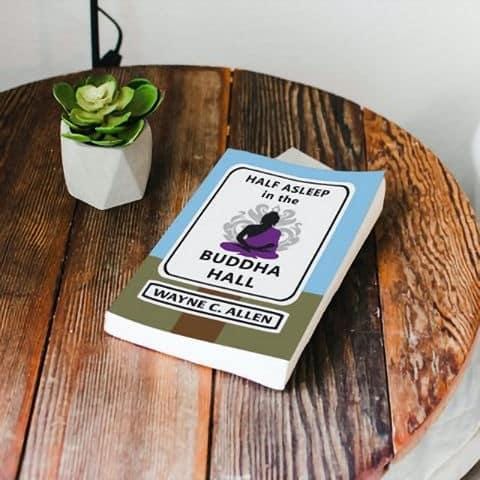
Check out my book,
Half Asleep in the Buddha Hall.
My “Eastern” book takes you by the hand and helps you to find peace of mind.
Half Asleep in the Buddha Hall is a Zen-based guide to living life fully and deeply.
(Here’s a direct Amazon link)
Purchase digital versions (Apple, Nook, Kobo, etc.) from this page
Perhaps one of the hardest things to “get” about present and focused living is the mechanics of how it all works. This topic is so important that I wrote a book about it.
Understanding Zen Principles: Zen and Simple Presence enhances our approach to mindfulness and living in the moment.
Half Asleep in the Buddha Hall uses Zen stories as starters for each of the chapters. Here’s an example:
A guy named Harry is on a quest for enlightenment. He tries everything. He goes to school. Nada. He becomes a life coach. More nada. He worships in the local shrine-of-choice. Mucho nada.
Desperate, he decides to climb a mountain in Nepal, to visit His Holiness, Rama Dama Ding Dong. It is an arduous trip. (Aren’t they always?)
Finally, near death, he collapses on the ground near a steep path. He looks up, and sees an old man walking down the path, carrying a big bundle of firewood on his back.
Harry says, “I’m looking for Rama.” “I am he,” replies the guru. “Oh, thank god!” Harry says. “I’ve been searching for so long. Please, tell me, what is ‘waking up’?”
The guru takes off the bundle of wood, sighs deeply, and smiles. In that instant, Harry woke up.
Then Harry’s mind got involved. He asked, “Please, pardon another question, but what do you do after ‘waking up’?”
Rama picks up the bundle, places it on his back, and continues down the hill.
In this journey of self-discovery, Harry learns the essence of Zen Principles: Zen and Simple Presence.
The problem with Zen, simple presence and “the path” is that it is entirely too simple. It boils down to this:
One step, and one step, and one step, until you die.

The ease, the simplicity… it’s actually a matter of non-complicating things. Because dealing with things in a non complex way leads to… peace, clarity, and no little amusement.
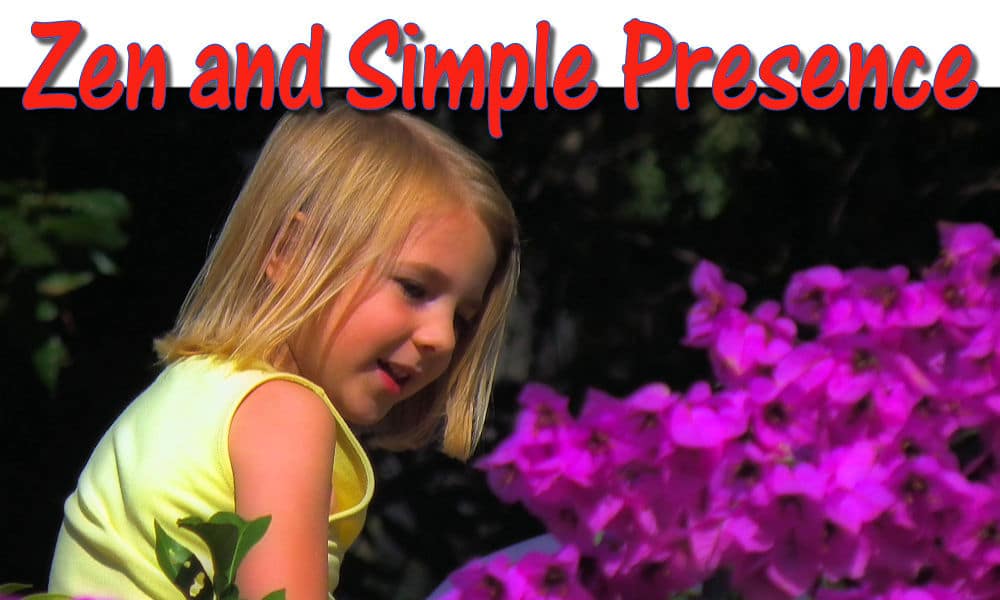
It’s my friend in this photo, dangling her shoe. The process is simple, if you let it be simple.
Simple presence allows us to experience life moment-by-moment.
This is emphatically not what most people do. Most people, by getting caught in a “thought loop,” quickly drop out of “the now.”
Let me illustrate… and this is something I cover in my book, This Endless Moment):
The things that occur in our lives are simple events, phenomenon, or stimuli. (You pick a name.) They are essentially meaningless (meaning that they lack intrinsic meaning.)
Now, you may want to rush in and say, “Hey! Stuff has meaning!” And you would be right. It just doesn’t mean anything in its essential nature. In other words, everything, including us, derives meaning from a human being.
Each and every thing means what the person (each person) makes it to mean.
This is the process of interpretation, or judgement. We all make them, all of the time.
There is absolutely nothing wrong with our judgement process. In a sense, we’d be dead without it. It is, after all, what tells us not to pick up the glowing fireplace poker.
A Zen teacher, Adyashanti, used this illustration (which I’m paraphrasing):

“A poisonous snake crawls up a man’s arm. The non-present person thinks, “Oh. My God! A snake. I wonder if it will bite me. What should I do?” The snake bites him and he dies. The awake, aware, and ‘present’ person simply flicks off the snake.”
Where the problems come is when a judgement occurs… and instead of simple action, we, (like the snake bitten man,) stop, lose presence and go into our heads to universalize and awfulize.
It’s “It will always be like this. This is a terrible situation, and terrible situations always happen to me. Why can’t I ever meet the right man? Why do bad things keep happening? I must be a bad person. No, I’m surrounded by bad people. Why do I attract bad people?”
Snake bit. Dead.
All of that internal chatter happens, and then we might anger ourselves or scare ourselves over the story we invented. This leads us to either attack or run away. In order to do this, I have to go into my head, away from the present moment, and start chewing on the data.
In the mean time, the world has moved on, and the data might no longer be relevant.
I receive a stimulus, I interpret it, I may also notice simultaneous emotions. In that moment, I have two choices,
- I can say, “Hmm. Here’s what appears to be up for me. I will act (speak, not act, report, share) in this way, thus staying present.”
- I can immediately go non-present, and start playing back awfulized stories, which add to my personal drama. This only accomplishes confusion, mis-direction and inaction (or wrong action.)
See? I said it was simple.
Now, a lot of “special” people out there are going to argue with me, based upon their thinking that I do not understand their “special” circumstances, background, DNA, situation, partner… whatever. But you see, all of that is irrelevant.
All there is, are the circumstances in front of you, and your choice. It’s not about anything, it doesn’t mean anything, and no one else can do anything to change your internal representation, or change what you are about to do, or not do.
Rama Dama Ding Dong did not bemoan picking up the wood. He didn’t complain about his sore back. He didn’t blame his parents for not being rich so someone else could carry the wood for him. He didn’t blame his wife for not using the communication model.
He picked up the wood and walked.
Being present is this. I will always judge and evaluate. This is the way it is. The purpose of judgment is to go: “Snake!”
And then brush the snake off.
Being Present is this. My actions are consistent with my walk. I act clearly and cleanly, without blame or drama. There is nothing I have to do or learn before I can act with simple presence. Simple presence is a here and now focus, choice and perception.
I know many people who begin this path, and then scare themselves with the intensity of the experience and take a year or a lifetime off. Therefore, remember: all you have is now, and this walk requires one thing – walking.