
- Letting go of Assumptions — Letting Go Series
- Letting Go of Enchantment — Letting Go Series
- Letting Go of Self-Indulgence — Letting Go Series
- Letting go of Techniques — Letting Go Series
Letting Go of Enchantment — Enchantment is like a story-trance. We’re projecting, telling stories, and lost in the story. Disenchantment lets us see and interact with “what is.”
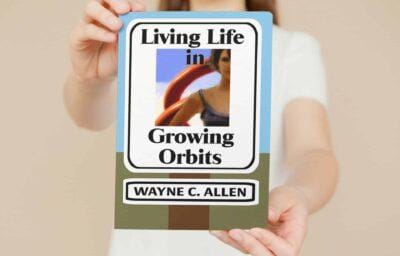
Living Life in Growing Orbits is our workbook.
52 weeks of daily exercises designed to help you figure yourself out.
Check out Living Life in Growing Orbits on our site.
Direct link to Amazon
Purchase digital versions (Apple, Nook, Kobo, etc.) from this page
The book Fire Monks is the story of 5 monks who, in 2008, remained in the path of a wildfire to save the Zen Monastery in California. (I read it as an e‑book, so no page number for the quote, to follow…)
Working through each of the gates of perception-the eyes, ears, nose, mouth, body, mind-and the fires at each gate, the Buddha taught that “disenchantment” is the path to liberation. He urged the monks not to stamp out the fires of the senses, but to simply see that they are there and to recognize them for what they are-sensations, perceptions, thoughts, not solid or fixed, but always burning, transforming.
~ Fire Monks: Zen Mind Meets Wildfire at the Gates of Tassajara, by Colleen Morton Busch
In Zen, the gates of perception are the normal 5 senses, plus the mind. In each case, there is a stimulus, and then a response. So far, so good.
The 5 senses do what they do: eyes see, ears hear… The mind labels and rates. “That apple is red and tastes delicious!”
A look at enchantment

Enchantment could also be thought of as desire (or aversion, or confusion about), which is where we get into trouble.
These three (often described as clinging) is what leads to suffering, or better, unsatisfactoriness.
Buddhists in the crowd will realize I’m playing with the 4 Noble Truths here.
Our suffering comes from our enchantment with what we are interacting with. Rather than deal with it and be done (to be available for the next thing), we want more, more, more of what we like, none, none, none, of what we detest, and if we are neutral, we can’t figure out “why.”
In Zen, on the other hand, one deals with what is in front of us as it is.
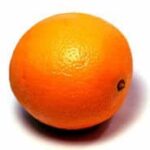
Example: I see an orange. I can choose to reach out and eat it. Clean, simple.
There’s an exercise you can do that covers the 6 Gates.
- 1. Look at the orange. Really see the pores in the skin.
- 2. Smell the orange. Inhale the scent of the peel.
- 3. Listen to the sound of peeling the orange.
- 4. Rub the peel, and an orange slice, with your fingers, or any place else you’d like to rub it.
- 5. Taste the orange.
- 6. Repeat each of the senses with an orange segment — look, smell, listen to the sound of biting in, feel it.
- 7. And, all along, observe your mind as it describes (analyzes) the experience. “Pretty! Sweet! Soft! Smooth! Juicy!” etc.
- 8. Eat the entire orange slowly, mindfully.
In psychotherapy, this might be called a Gestalt, or a complete event.
This is engagement, without enchantment.
What I mean is that what we “feel,” or sense, is perfectly normal, and complete in itself, as per the quote above:
“He urged the monks not to stamp out the fires of the senses, but to simply see that they are there and to recognize them for what they are.”
Where we get into problems is when we start telling stories.
The flavours of enchantment, again, are: desire, aversion, and confusion. The problem, then, with our desires is that they are projections (additions, figments of our imagination) that are placed upon that which is right in front of us.
Let me just tell a story to describe all of this.
Once upon a time, Susie met Sam at a party. He was attractive, chatted her up, smelled and felt good… and Susie liked what was right in front of her. So much so that Susie brought Sam home that very night, and they spent the night doing the horizontal mambo. (Sort of like an all night orange tasting festival…)
The next day, Sam left, and promised to call.
Susie had a choice to make.
- The Zen choice: have a shower, make breakfast, and engage fully with eggs and bacon.
- The enchantment choice: walk through her day in a daze, obsessing, getting turned on, fantasizing.
She chose desire and enchantment.
She mooned over Sam. She told her friends that he was perfect, that she was going to move in with him, that he fit her “List of 50.” Susie just knew that the sex was going to get better and better. They would travel, and play, and he would inspire her to create masterpieces.
He took a week to call back, said he’d had fun, and that he was interested in having sex with her, but wasn’t prepared to leave his girlfriend.
Girlfriend!!!
“He never told me about a girlfriend! What a sleaze! He’s a terrible person!”
She now chose aversion and enchantment.
For two weeks, she stewed, and chewed, and made up more stories. All about what terrible things she imagined Sam was doing, or capable of.
Then she heard that Sam had taken up with a mutual friend.
She ended up confused and enchanted. As usual.
She now blamed herself for being dumb, easily led astray. She had trouble believing she was ready to marry Sam, and that she had wasted so much time on him. (Remember: she’s actually spent 12 hours with Sam.)
Susie sighed, resignedly, “I guess I’m just not the right person for anyone. I never catch a break. I guess I’ll always be alone.”
Enchantment is all about story-telling.
In each case, Susie was not describing Sam. She was describing her story about Sam, and in each case, her story was fixed and frozen. First, he is always and only perfect (and hot!) Then, he’s always and only a jerk. Then, he drops to background, and she becomes the woman who always misunderstands.
Yet, and here is the disenchantment, nothing, absolutely nothing, is fixed.
We are not a fixed “me” — we are a dynamic process. We are this, then that, and there’s no story about any of it.
A lifetime ago, one of our very cool nieces just left. She described the family’s stay at a cottage. She ran around our kitchen and living room, saying, “And here is a door and here is a bed…” She finished her story and was immediately on to something else.
She was a flowing process — a storyteller — not a story-believer.
Her sister, meanwhile, moved from yoga pose to yoga pose, then to my studio, then to cleaning my paint palate of dried paint, then to a story, then to lunch. 100% engaged, and 100% flexible.
Kids get being present — we could choose to do so, too.
The feelings we have, are meant to be felt, full bore. But here’s the key: it’s essential that we feel it all, and then let go.
Not just feel what we want to feel, but all of it. Not accepting one story about ourselves or others, but all of them. Not picking one set of behaviours, but playing with life in its myriad forms.
Always with 100% attention, and 100% disenchantment.
Then everything is everything, and everything is nothing, and we are a part of the real world, experiencing it all, with no judgement and no reserve.
Full bore living, “…not solid or fixed, but always burning, transforming.”