
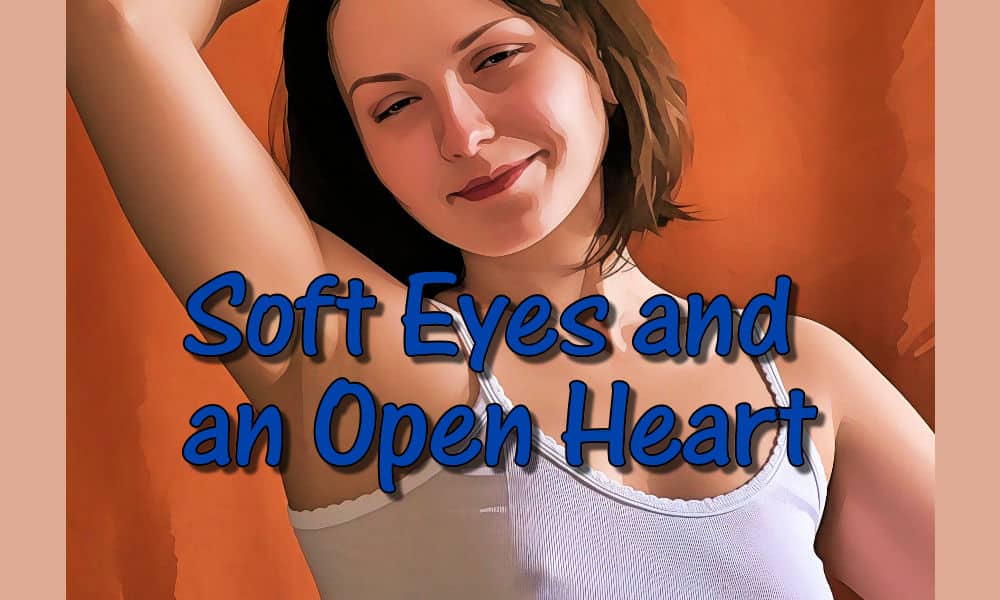
Soft Eyes and an Open Heart — open-heartedness requires an empty heart — a difficult concept for Westerners to grasp. Soft eyes produce astounding clarity. Let’s see how this works as a dance of intimacy.
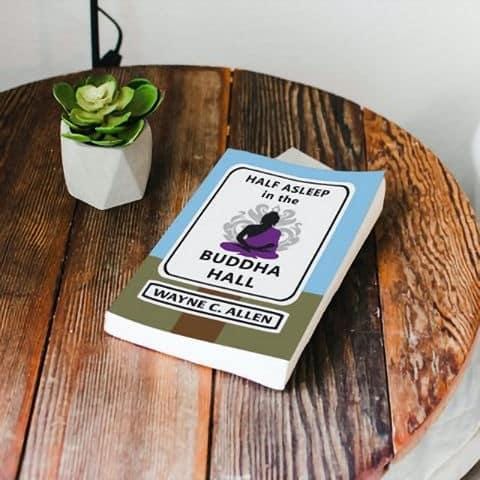
Looking for more on this topic?
Check out my book,
Half Asleep in the Buddha Hall.
My “Eastern” book takes you by the hand and helps you to find peace of mind.
Half Asleep in the Buddha Hall is a Zen-based guide to living life fully and deeply.
(Here’s a direct Amazon link)
Purchase digital versions (Apple, Nook, Kobo, etc.) from this page
Perspective is everything
Or, everything is “seen” through my perspective, or filters. And perspective is another way of saying “story.” So long as I remember that my story is not “real” or “true,” it’s fairly easy to proceed. When I get lost in the details of my story, I get myself off-track.

I was sitting with a client after Bodywork, and she was asking questions. One concerned her shoulders — why she left our sessions relaxed and loose, and then would find herself tightened up.
I noted that she was sitting lightly in the chair, arms and legs open, shoulders comfortably neutral.
I asked her to feel her body, and memorize what relaxed felt like. Then, to notice just one step away from relaxed, stop, wiggle, and loosen.
She looked at me, astonished.
“I could take what I learn here, and use it at home!”
I laughed. Of course. This would be the point.
She got off track when she went up into her head, told herself stories, tightened up, yet missed the tightening. When she noticed (finally) the pain (as opposed to noticing the tightness before it turns into pain), she told herself stories as opposed to doing something different.
And all that is required is letting go — of the stories and the tightness.
Where I get caught is with “wanting to help.”
I get all invested in my stories — I see where people want to get to, and I get into taking responsibility for others’ drama. I get invested in doing more work, expending more effort, than the other person. And as soon as I go there, my heart closes, and I feel cold and shut down.
Ben Wong and Jock McKeen wrote several great books, including The Illuminated Heart. Here’s a quote that speaks to this:
“You succumb to the trap of hope, which is the flip side of despair. In your hope is a presumption that things could be, should be, different. As we have often discussed, this is the one basic sin… the sin of presumption. We cannot make life different. Hope tries to do that.” (The Illuminated Heart. 44–5)
This has been a key understanding for me… one I continue to work on. I find ease when I let go — when I empty myself:
By staying put in my own “self,” emptying myself of my desire to “help” — by seeing the other person with an open heart and soft eyes.
It’s all about emptiness
As I was reading “The Illuminated Heart,” the Eastern section, I was struck by this: in acupuncture theory, the yin organs are receptive. The heart (a yin organ) functions best if empty.
Western minds, ever literal, struggle here.
Especially over the thought of an empty heart
[In Chinese thought…] “The shen are life spirits that reside in the heart. The heart itself is empty and is the special place where the subtle spirits can come and go freely. But the heart must be open or the shen will not stay.” (p. 305)
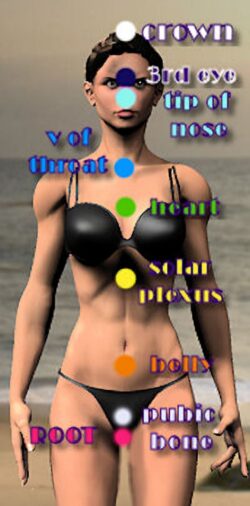
In both Indian and Chinese medicine, the Heart is at the centre of things.
For the Chinese, the heart is the locus of both thought and feeling. It’s the mediation point between heavenly (yang) and earthly (yin) energies.
In Indian medicine, it is the Middle Chakra (1,2,3 heart,5,6,7).
So, I’m wondering: if a heart is full, might we say it’s full of thoughts and / or feelings? And being full, there is no room for anything else.
If the thoughts and feelings are not clung to, the heart processes them, and returns to an open, and empty state.
But… people fear emptiness, and so they “attach.” Physically, people tighten their chest ligaments
Why? To lock in feelings (so they don’t escape — nothing worse than a loose feeling!) and keep out “threats.”
The chest contracts, the shoulders roll forward.

Many folk, when asked about their feelings, add a layer of protection by crossing their arms over their chest. In a sense, the physical action serves to keep the heart full.
It’s no coincidence that, when we are in “emotional overwhelm,” we describe it as, “My heart is full.”
Almost no one in the West wants to utter the words,
“My heart is empty.”
This is because we fear emptiness, as it’s way too close to annihilation.
The existentialists made this point repeatedly, by insisting that angst had everything to do with fearing meaninglessness and death.
Most have learned to “stuff” the “emptiness / aloneness / void-ness” feeling (typically felt in the chest/ heart region.) The stuffing, again, is done by using our old friends, thoughts and feelings.
If I focus on “stuff,” or “stuff-ing,” I can avoid the void.
I think most people “live” with a feeling of despair.
Believe it or not, most find despair preferable to actually living, which requires embracing everything — emptiness and fullness, life and death.
Without judgement or preference!
“When we do not stand forth [be ourselves — through openness, honesty, vulnerability — WCA], we fade into the oblivion of nonbeing. We are still alive in the biological sense, but not present, not distinctly standing forth, not existing; this has been called “the death in life” and describes a zombie-like simulacrum of a vital being.” (p. 149)
I know from personal experience that the only way to be present (to stand forth) is to make peace with everything — including emptiness.
Abandoned bodies litter the highway of the Pathless Path, and abandoning yourself makes it damn difficult (Impossible!) to stay present for the dance of life.
Let’s look at soft eyes.
Some years ago, I wrote an e‑zine post called “Soft Eyes.” The plot revolved around going to see “The Best Little Whorehouse in Texas” at a local dinner theatre, and ending up with a table that abutted the stage.
As in, the actors feet were even with the top of our heads, and when we looked up, we were staring at their legs, and crotches. If we really craned our necks, we could see their faces.
The take-away was that being that close meant we were focussed too much on details like how well the scantily-clad actresses had shaved, and how ripped and torn their costumes were.
We needed distance: in the article, I wrote:
Much like our seats at the theatre. Nothing we did from those seats could change anything. We made jokes, we rubbed our necks, we looked away. And every time we looked back, we saw more. Razor nicks. Band-Aids. Varicose veins. Bruises. With each new revelation, our attention was drawn away from the enjoyment of the play, and into, “I wonder what we’ll see next?” ”I’m sure it will be worse!”
The only way we could have fixed the situation was to get up and move or get up and leave.
The fix was less detail and more distance. Seeing the bigger picture, as opposed to drilling down on the details.
Soft eyes accomplish this.

Another client, like many, had been “trained from birth” to stuff her emotions. She was quite successful, in a profession where stuffing emotions was a necessity.
She stuffed her stuff by telling long, convoluted stories, (filling her heart with stories) while tightening her body. Not only that, but she had zeroed in on one or two “big issues” as “the real problem.” (Too much detail, and too close a perspective.)
I was heartened (wink) to notice that, when she uncrossed her body, she was able to express some emotion.
We decided to work on connection through Bodywork.
After some breathing, she let her legs and arms open, and I helped her stretch her neck, in a sense lengthening her into her full height.
Her breathing deepened and sounded blissful, deep, and even.
Her body began to tremble. Her shoulders dropped back to the pad, and in that instant, her quite wet eyes popped open, and locked on to mine.
This soft-eyed gaze is a marker that the stories have, for the moment, dissolved.
Her heart was empty (of her stories), her body was open and undefended, her throat was resonant with sound, and her eyes were soft. At that moment, nothing was needed.
If either of us had succumbed to the need to “fill” the emptiness — with stories, explanations, with tightness or resistance — the moment would have snapped away, and we would have detached, becoming closed and impenetrable.
There is no intimacy without openness.
An open heart is an empty heart, always ready to dance, to discover, to meet, AND to let go. Not to cling, but to let go. Not to detach, but to let go.