


- Ideas for Zen Living: 12 Presence Presents
- 5 Communication Tips
- 10 Quick Examples of Zen Living
- Better relating — 6 Ideas
- Fearless Living — 7 Tips
- 5 ways to pay attention
- 10 Zen Principles to Help You Live Life Better
- 7 Ways to Live in This Endless Moment
- 5 Key Concepts for Zen Living
- 9 Tools for Relating
- 3 Riffs on Relating
- Vulnerability — 5 things
- 5 Life Lessons You Need to Get
- 9 Ways to Screw up a Relationship
- 10 Things Your Mommy Forgot to Tell You
- 5 Ways to Get Your Act Together
- Cure What Ails You — a Handy Dandy 5‑step Plan
Cure What Ails You — Left to our own devices, we are never better than our list of rules. Right and wrong discussions lead precisely nowhere.
Here are 5 ways to step out of this swamp, giving you the chance to free yourself, and let others be.

Psst! Hey!
** Want more great writing designed to help YOU to shift your behaviour?
** Want to learn how to find, build or deepen your principal relationship?
** Want to know more about Zen living and being?
Listless Lists
The very first thing we learn, after the names of things, is where each thing is “located” on the scale of good / bad, right / wrong. Because we are compelled to make these evaluations, as children, with the force of tribal beliefs behind the lists, in a real sense we are quite unreflective as we judge.

It’s kind of odd, how seldom we
look at our baseline beliefs.
To do so authentically, we need to look outside our tribes and cultures, and take a wider view. As we do, we see that, pretty much universally, any behaviour or object you consider “wrong” is considered “right” (and put into practice) by some other group.
Indeed, some things you judge as wrong or bad are other people’s religious practices, and are held to be not only right, but ‘god-given.’
It’s no wonder we are constantly at war.
War is nothing more than a clash of ideologies and beliefs. Sticks and stones have been replaced by Scuds and bombs, but the game is the same.
This is also so when it comes to interpersonal conflict.
My counselling career stretched from 1981 through 12013, and the only time I ‘knew’ someone was ‘wrong’ was when they physically hurt another. And I recognize that this is my personal determination, or bias.
Beyond physical violence, differences between people are always differences of opinion, and it’s impossible to judge which perspective is ‘right.’
This is not to imply that I do not have a personal preference.
I have a decided personal bias toward good communication, and I can even define such communication for you.

Simple, profound lessons in relating
The. Best. Relationship. Ever.
Purchase all formats at Amazon
Purchase digital versions (Apple, Nook, Kobo, etc.) from this page
My prejudice in favour of elegant communication is based upon my experience. My view works for me, and I intend to teach this way of communicating. Not because it’s ‘right,’ but because it works… again, for me.
Note: It’s taken me several decades to learn the difference between being right and having a personal bias or preference. I spent much of my time, before age 32 or so, trying to persuade everyone of the correctness of my beliefs. So I have some compassion for people who are stuck in ‘persuasion mode.’ It runs deep.
I suspect that the alternative to being right is to understand the meaning of integrity.
People insist that they are ‘right’ because they fear calling everything they believe into question.
Example: It seems strange to me, for example, to hear men tell me how women ‘should’ behave toward them (or vice versa) and yet have never found anyone interested in being that obedient. Indeed, all of their relationships have featured the opposite of what they want.
Yet, on and on they insist that they know better, and that the problem is that they haven’t found the ‘right’ person. There’s that word again. It never occurs to them to change their beliefs. They just keep changing people.
Clinging is to blame
In Buddhism, unease (Sanskrit dukkha, often translated ‘suffering’) comes from clinging to something, and in this case, it’s clinging to preconceived notions.
Notice that word. Pre-conceived.
This means “thought of in advance.”
In other words, I am applying a rule or judgment from the past without thinking, to a present situation. Or, I’m just applying ‘what I always do,’ with no regard to the present situation at all.
All clinging is a form of attachment, and our attachments are always to our mental formations.
Here’s the interesting part: notice how often you’d rather be considered ‘right’ about your fervently held beliefs, to the extent that you’ll ruin relationships, sabotage careers, and spend your life in misery. But boy, are you ever right!
I’m a simple Zen guy, so I “simply say”:
“If you are not content,
it’s likely your beliefs that are getting in your way,
so let’s work at changing them.”
Up pops your ego, which says,
“But … but … I’ve spent years developing these strategies, and your job is to make them work, so I don’t have to change anything!”
But, you see … I’m just not interested. I really want you to consider not having beliefs. To approach your life directly, trust your instincts, and to engage with life as opposed to categorizing it.
To have a life, rather than a judgment.

Haven’t you figured this out yet? All of your stubborn, well-worn platitudes about how life should be, have never worked out, and never will.
You can rant, rave, whine, sob, sniffle, grouse, bitch, moan, complain, lecture, defend, demand.
And nothing changes.
Except you get to feel hard-done-by. So, doing more of this, harder and louder, is somehow going to suddenly start working? I think not.
I love the Tao Te Ching for its practical wisdom and innate grasp of the energy of the Universe – chi.
Here’s the 56th chapter, translated by Gia Fu Feng and Jane English
Those who know do not talk.
Those who talk do not know.
Keep your mouth closed,
Guard your senses.
Temper your sharpness.
Simplify your problems.
Mask your brightness.
Be at one with the dust of the earth.
This is the primal union.
He who has achieved this state
Is unconcerned with friends and enemies,
With good and harm, with honor and disgrace.
This therefore is the highest state of man.
That first couplet is famous. It has a specific meaning, and it’s not to stop teaching. The Tao te Ching would not exist if that were the case.
The meaning is this: people who lecture others about right and wrong ‘don’t know.’ People who live (without pronouncements) according to the Tao ‘know.’
Here’s how (finally! 😉 ) The handy dandy 5 steps to cure what ails you
1. Close your mouth, guard your senses.

Most of the time, shutting up is a good idea.
- Yup. Shut up. Say, for the next decade or so, to make up for all those years of pronouncements.
- You will finally have something worth saying when you get your own act together.
- Before you tell all in sundry how to have an excellent relationship, actually be in one for a while—you know—10, 20 years.
- Just go live your spiritual practice, quietly.
- Do your job, with excellence, no matter how many ‘odd little birdies’ surround you.
- Live a healthy lifestyle, and let others inhale Big Mac’s unmolested.
1a. Guard your senses—let in what comes in, and understand it’s just data. Your mind will chew it, and judge it, and try to get you all hot and bothered, but resist the urge to let all of that back out.
Just be with it, gently.
2. Temper your sharpness.

Are you all edges and prickles?
Many are. Non-cuddly, all protected.
It’s so easy to flare up, to defend and then to come out swinging. You have so much more invested in drawing blood in every encounter than in simply being with others.
- Tempering is done through heating and cooling off. Tempering makes metal useful.
- As your heat arises, seemingly unbidden, have a breath, cool off, and see point 1—stop talking.
- Breathe. Observe. Let your walls down.
3. Simplify your problems

Elsewhere, this is translated, “untangle your knots.” Notice how self-responsible this text is. All problems, all knots, are self-created and inflicted.
Here’s how to simplify: you feel yourself tensing up, getting “all knotted up.” Ask yourself:
- Why am I creating a drama here?
- Is deciding I have a problem making things easier or harder?
- What would happen if I just dealt with this, rather than first assigning blame, then tying myself in knots?
4. Mask your brightness.

This reflects the couplet about those who know versus those who talk.
Many tell me that they are “just looking out for their partner’s best interests.” And then they go on to describe the current lecture, advice, diatribe, or ‘encouragement’ they delivered.
To me, it’s more of the same.
In almost all cases the partner did not ask for advice. Often, what the partner asked for was to be listened to and heard. Not the same thing, at all.
I find, with Darbella, that 95% of the time she is asking for the latter—to have a safe place to be heard. Occasionally, she also wants to know what I would do concerning the situation.
I always have an opinion, but I know it’s based solely upon me and my nature. It’s not right, it’s just “how I do things.”
- So, back to # 1. Shut up—and listen.
- You don’t have to be declared right. Because you aren’t. Simple as that.
5. Be at one with the dust of the earth.
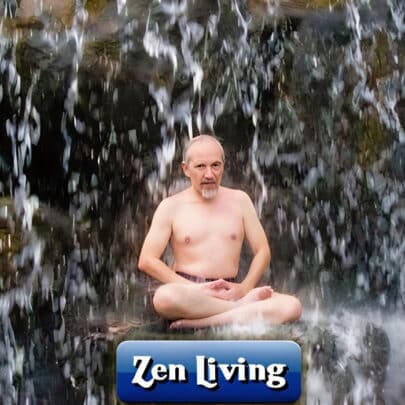
You know when you are “stirring up dust,” and you also know what it means to ‘let the dust settle.‘
This idea also links to #4—being ‘common,’ like the dust of the earth, is to be taken for granted, in the best sense of that term.
We simply assume that the ground is there, and that it will support us as we walk on it. The ground does not ask for our praise—does not ask to be rewarded for its support.
So, be the ground. Support, listen, be present, just be there, unobtrusively, and without agenda.
If you look at the rest of the text of #56, you’ll see a description of someone unconcerned. This does not mean disinterested or disconnected. The idea is that one can actually be present in the world, curious, supportive, knowledgeable, and existing at the highest level.
This is possible only when the opinions by others about our character and motives is no longer a concern.
Many are the people who try to be popular, who try to be all things to all people, who try to ‘help.’ Lives wasted being jerked around by the whims and will of others, and it’s only possible if you co-operate.
Non-co-operation is not by making a demand—“I told you and told you. Don’t make me unhappy!” Yikes. Who cares?
Non-co-operation is simply this: “Here is me, living out me, as me.” I intend to do this, and am not looking for permission. I’m also not looking to be told what to do, as you can’t know what’s best for me. I also know I do not know what’s best for you. So, I’m just going to hang out here, and be me. I hope you’ll join me.”
Clinging to rules—to right and wrong—will get you endless conflict and no peace. Decide who you are and how you want to be—and make that picture your ‘best self.’ Then, quietly live from your best self.
Simple.